
Connecticut renter guide · reviewed October 2026
Demand Letter for Security Deposit Return in Connecticut: 5 Steps Before You Send
Check the current 21-day and 15-day timing branches, gather records that support your dates and balance, and prepare a clear request without treating a template as legal advice.
Reviewed
Quick answer
Connecticut has two timing branches
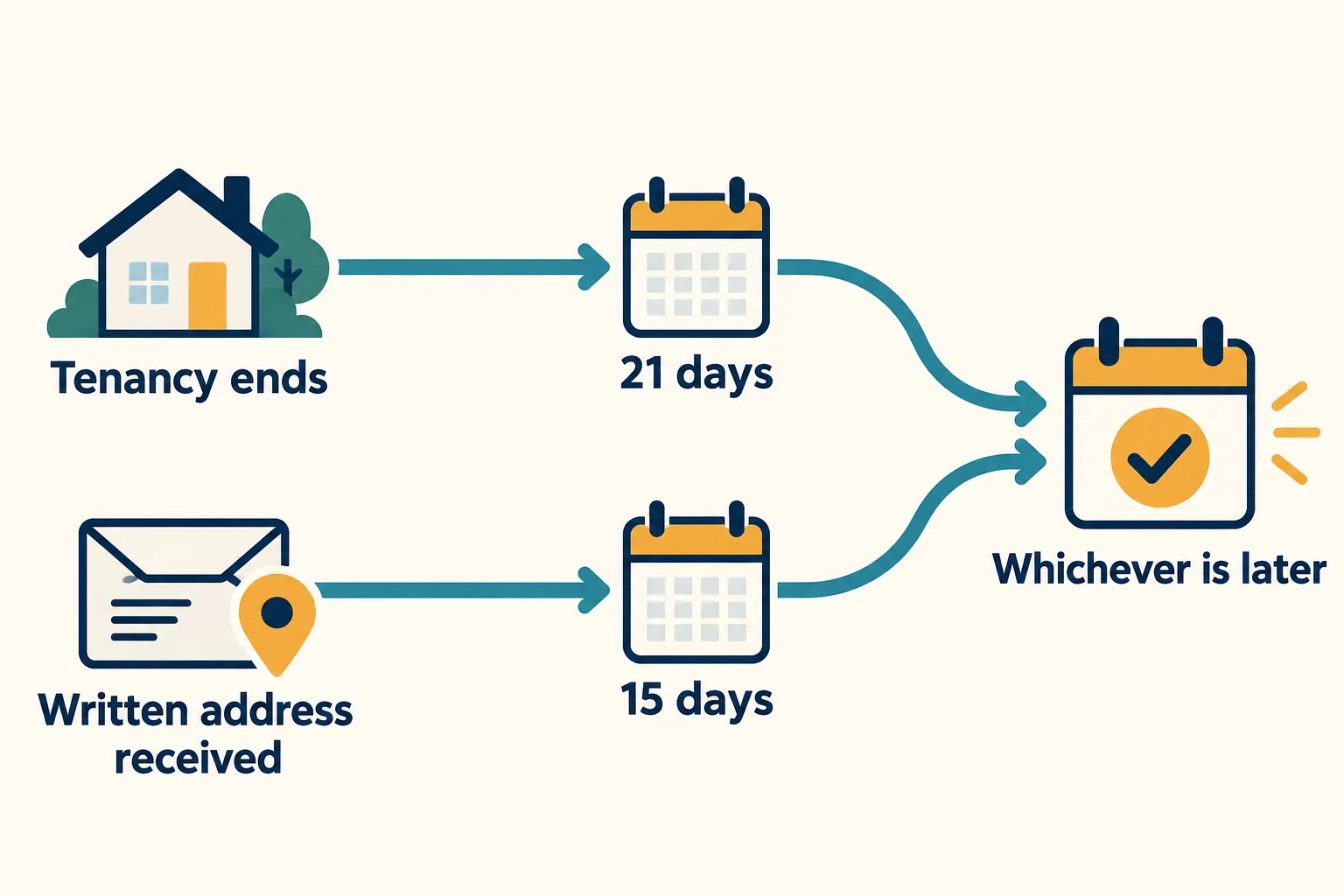
Under Connecticut General Statutes § 47a-21(d)(2), a landlord generally must return a security deposit with interest or send written notice of the nature and amount of damages within 21 days after the tenancy ends. If the tenant gives written notice of a forwarding address after that, the statute allows 15 days after the landlord receives that notice. The applicable deadline is whichever is later.
A clear demand letter can put the dates, disputed amount, forwarding address, and supporting records in one place. It does not decide whether a deduction is lawful or guarantee a refund. Check the current statute and Connecticut Department of Banking guidance before relying on a deadline for a particular tenancy.
The statute uses the later of the two applicable dates. Keep proof of when written forwarding-address notice reached the landlord.
How Connecticut’s return deadline works
The current Connecticut rule is different from older online templates that still say 30 days. Section 47a-21(d)(2) sets a 21-day period after the tenancy terminates. Within that period, the landlord generally must return the deposit with the applicable interest or send written notice describing the nature and amount of damages. If the tenant later supplies a written forwarding address, a second clock may apply: 15 days after the landlord receives that notice. The statute says to use whichever deadline is later, so the address-notice date can extend the time in some cases.
For example, imagine a tenancy ends on May 31 and the landlord receives the tenant’s written forwarding address on June 10. The 21-day branch points to June 21, while 15 days after the address notice points to June 25; the later branch would be June 25 for this illustration. Real dates can depend on the facts, the way the tenancy ended, and how notice was delivered. Treat examples as calendar aids, not legal conclusions, and verify the dates against the current statute or qualified advice.
The written notice of damages is more than a vague statement that repairs were needed. Connecticut’s statute calls for the nature and amount of the damages, including specified unpaid rent or utility charges where applicable, and an accounting of the balance with interest. Save any itemized statement and compare each listed charge with the lease, move-in condition, move-out condition, payment records, and messages. A disagreement about a charge is a fact question; a letter should identify the specific item and evidence rather than state that every deduction is automatically invalid.
Interest is part of the state’s deposit rules. Connecticut Department of Banking lists the 2026 rental-security-deposit interest rate as 0.49%. The rate is time-sensitive and may change by calendar year, so a letter prepared in another year should link to the current rate page and show how the amount was calculated instead of copying an old template. The Connecticut Banking page also recommends a written notice and certified mail with return receipt for a forwarding address; that is agency guidance, not a claim that certified mail is the only legally valid method.
Build an evidence file before you write
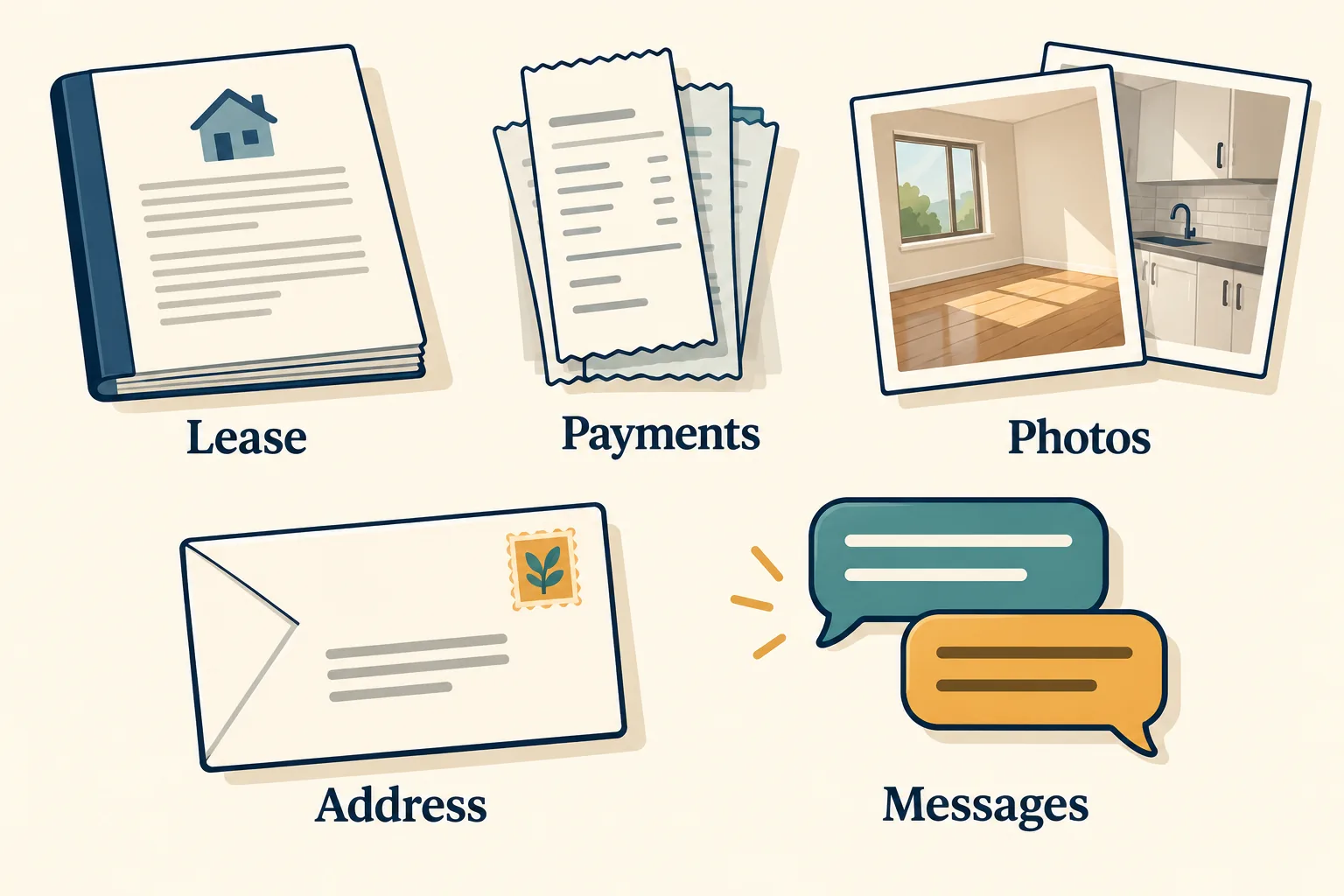
Start with records that establish the tenancy and the amount paid. A signed lease, deposit receipt, bank statement, canceled check, or payment-platform confirmation can show who paid, how much was collected, and when. If roommates contributed separately, note each person’s payment and any agreement about who should receive the refund. Do not send original documents; keep a dated copy of everything you include.
Next, organize records about the unit’s condition and the move-out. Dated photographs or video, an inspection checklist, maintenance requests, repair invoices you were given, and messages about existing damage can help explain what changed during the tenancy and what did not. A photo is more useful when its date, room, and subject are clear. Normal use, damage, cleaning, and unpaid charges can raise different questions, so describe observable facts and avoid assuming a conclusion from a single image.
Finally, create a short date log. Record the tenancy end date, when keys were returned, when the forwarding address was sent, how it was delivered, when the landlord received it if known, when any refund arrived, and the date of each message or notice. This timeline helps you compare the statutory branches and spot missing records. It also makes a demand letter easier to read because the recipient can follow the sequence without searching through a long email thread.
| Record | What it can help establish | Practical check |
|---|---|---|
| Lease and deposit proof | Names, rental address, deposit amount, payment date | Match names and figures to the lease and receipts. |
| Forwarding-address notice | The address supplied and when the notice was sent or received | Keep the message or letter and delivery confirmation. |
| Move-in and move-out photos | Visible condition and changes over time | Keep original files with dates; label each room. |
| Itemized damage statement | The landlord’s explanation and amount for each charge | Compare each line with photos, invoices, and lease terms. |
| Messages and payment history | What each party said, amounts returned, and timing | Export or save complete threads and transaction records. |
| Key-return or inspection record | When possession ended and any agreed condition notes | Keep a copy of the receipt, checklist, or dated email. |
What to put in a Connecticut security-deposit demand letter
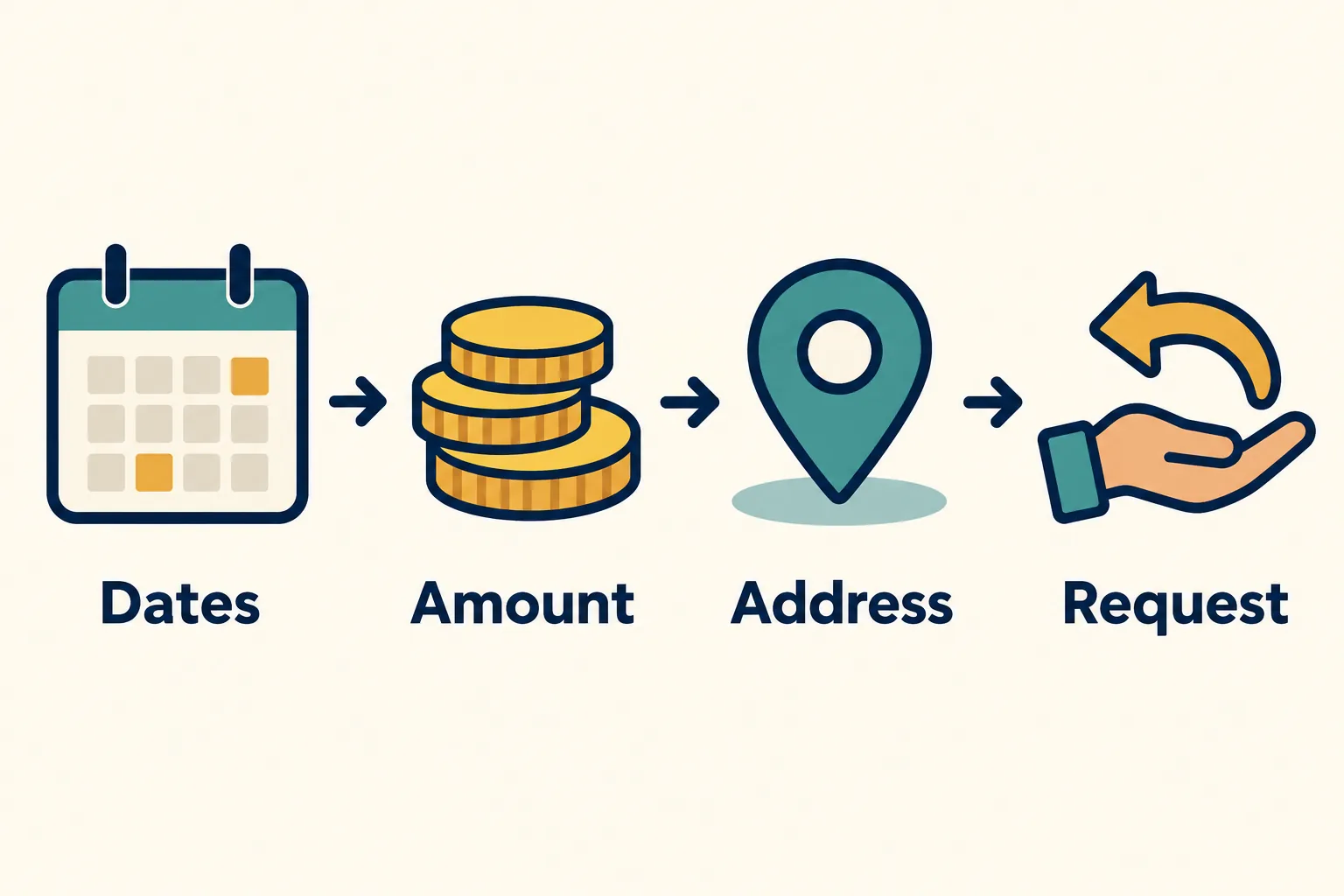
A useful demand letter is specific, dated, and easy to verify. Open with the tenant and landlord names, rental address, tenancy end date, original deposit, amount already returned, and amount still disputed. If you are requesting a remaining balance, state the arithmetic plainly. If you do not yet know how the landlord calculated deductions, ask for the written itemization and accounting required by the applicable rule instead of guessing at a number.
State the forwarding address in the letter even if you sent it before. Give the date and method of the earlier written notice, and attach or identify the delivery record if you have one. Then describe the response you are requesting: return of an identified balance with applicable interest, or an itemized written explanation and accounting. Connecticut’s rules distinguish a deposit return from notice of damages; framing a factual request around that distinction makes the letter more useful than a broad accusation.
Keep the tone neutral. A concise explanation of the timeline and disputed charges usually helps the reader check the file. If you challenge a deduction, identify the line item, the amount, the record that does not match it, and the result you seek. Avoid claiming that a particular penalty is automatically due or threatening an outcome that a court has not decided. A written request is a record of your position, not a court ruling.
- Identify the tenancy
List the parties, rental address, tenancy end date, and original deposit.
- Show the balance
Separate the amount returned from the amount still disputed and show the arithmetic.
- Set out the dates
Include the forwarding-address notice date and how you can verify delivery.
- Describe the request
Ask for the balance with applicable interest, or the written itemization and accounting you need to review the deductions.
- Attach a small evidence set
Include readable copies of the lease, payment proof, relevant condition records, and delivery confirmation.
Send the letter in a way you can document
Use a method that lets you preserve a complete copy and a delivery record. Connecticut Department of Banking recommends that tenants send written notices by certified mail with return receipt. You can follow that recommendation when it fits your circumstances, but the agency guidance should not be restated as a universal legal requirement. If you use another method, keep the sent message, its attachments, the delivery information, and any response. When you are unsure which notice method applies to a formal legal step, check the statute or ask a qualified Connecticut housing attorney or legal-aid provider.
Make one final copy of the exact packet before sending it. Save the signed letter, every attachment, the mailing receipt or electronic confirmation, and a note showing when you sent it. If you later receive a response or a payment, add it to the timeline. This simple recordkeeping step prevents a common problem: remembering what was requested but being unable to show which version reached the landlord or when it arrived.
Give the recipient a practical way to respond, such as a return address and a reasonable requested response date. Do not confuse that requested date with a statutory deadline, a court deadline, or a promise that the landlord must agree with your position. If a deadline in a lease, court notice, or statute applies to your situation, track it separately and verify it with the source that controls.
If the deposit is still disputed
If the landlord does not respond or you disagree with the itemization, compare the response with the records you collected and the current statute. Separate facts you can prove from points that remain uncertain. You may ask for clarification about a specific charge, correct a date or calculation, or seek advice before taking another step. Keep communication civil and in writing where practical; a clear record is more helpful than repeated messages that add no new facts.
Connecticut’s security-deposit statute includes a possible double-deposit remedy in specified circumstances when the landlord fails to comply. That does not mean every late, incomplete, or disputed response automatically produces a double payment. Whether a remedy applies depends on the statute, the facts, and a decision-maker’s assessment. Do not state in a demand letter that a court has already awarded a remedy or that payment is guaranteed. If the amount is significant or facts are contested, get advice from a Connecticut lawyer or legal-aid service.
A renter considering court can start with the Connecticut Judicial Branch’s current small-claims instructions and forms. Read the current filing guidance, check that the claim fits the court’s rules, and organize the lease, payment proof, condition evidence, address notice, itemization, correspondence, and delivery records. Court procedures and limits can change; use the Judicial Branch’s current materials rather than an old blog post. This article is a preparation guide and does not decide whether a claim belongs in small claims or predict its outcome.
Connecticut security-deposit questions
How long does a Connecticut landlord have to return a security deposit?
The general deadline is 21 days after the tenancy ends. If the tenant gives written notice of a forwarding address after that, the statute allows 15 days after the landlord receives the notice. The applicable date is whichever is later. The landlord generally must return the deposit with interest or send written notice of the nature and amount of damages within the applicable period.
Does the 21-day clock change if I send my forwarding address later?
It can. Connecticut General Statutes § 47a-21(d)(2) also provides a 15-day period after the landlord receives written notification of the tenant’s forwarding address, and says to use whichever deadline is later. Save the written notice and evidence of when it was received.
What is Connecticut’s security-deposit interest rate for 2026?
The Connecticut Department of Banking lists 0.49% for calendar year 2026. Interest rates are time-sensitive, so verify the official rate page for the calendar year that applies to your tenancy instead of relying on an old letter template.
Does a Connecticut landlord have to itemize deposit deductions?
The statute requires written notice describing the nature and amount of damages when the landlord does not simply return the deposit with interest, and an accounting of the balance with interest. Review the current statutory language and any notice you receive; this guide cannot determine whether a particular charge is valid.
Is certified mail required for a security-deposit demand letter in Connecticut?
The Department of Banking recommends certified mail with return receipt for written notices, including a forwarding-address notice. That recommendation is useful for creating a delivery record, but this guide does not describe certified mail as the only legally valid method for every notice. Check the rule for the specific notice you are sending.
Can I automatically demand double my deposit if the deadline passed?
No automatic award should be assumed. Connecticut law provides a possible remedy in specified circumstances, but whether it applies depends on the facts and may require a court determination. Describe the missed deadline accurately and seek legal advice if you plan to claim an additional statutory remedy.
Where can I find Connecticut small-claims instructions for a deposit dispute?
Use the Connecticut Judicial Branch’s current small-claims instructions and forms. Confirm current filing requirements and keep your lease, payment records, photos, address notice, itemization, correspondence, and delivery receipts together. Do not rely on a stale third-party filing guide.
Official Connecticut sources
These primary sources support the state-specific deadlines and procedural pointers summarized here. Check them again before acting because statutes, rates, forms, and guidance can change.
- Connecticut Department of Banking — Rental Security DepositsState guidance on return timing, forwarding-address notices, records, and recommended delivery methods; page reviewed in May 2026.
- Connecticut General Statutes, Chapter 831 (2026 Supplement), § 47a-21Official statutory text for deposit return, written damage notice, interest, and remedies.
- Connecticut Department of Banking — Deposit Index and Interest RatesOfficial annual interest-rate reference; the page lists 0.49% for calendar year 2026.
- Connecticut Judicial Branch — How Small Claims WorksOfficial court overview; consult the current Judicial Branch forms and filing instructions for your matter.
Organize your deposit facts
Use Depossier’s general deposit-check workflow to lay out dates, amounts, and evidence before preparing a request. You review and send any materials yourself.