
Minnesota renter guide · reviewed October 2026
Minnesota Security Deposit Return Deadline and Demand Letter
Understand the three-week return rule, organize dates and evidence, and send a factual written request if your deposit or a specific explanation is missing.
Reviewed
Quick answer
Minnesota generally gives a landlord three weeks
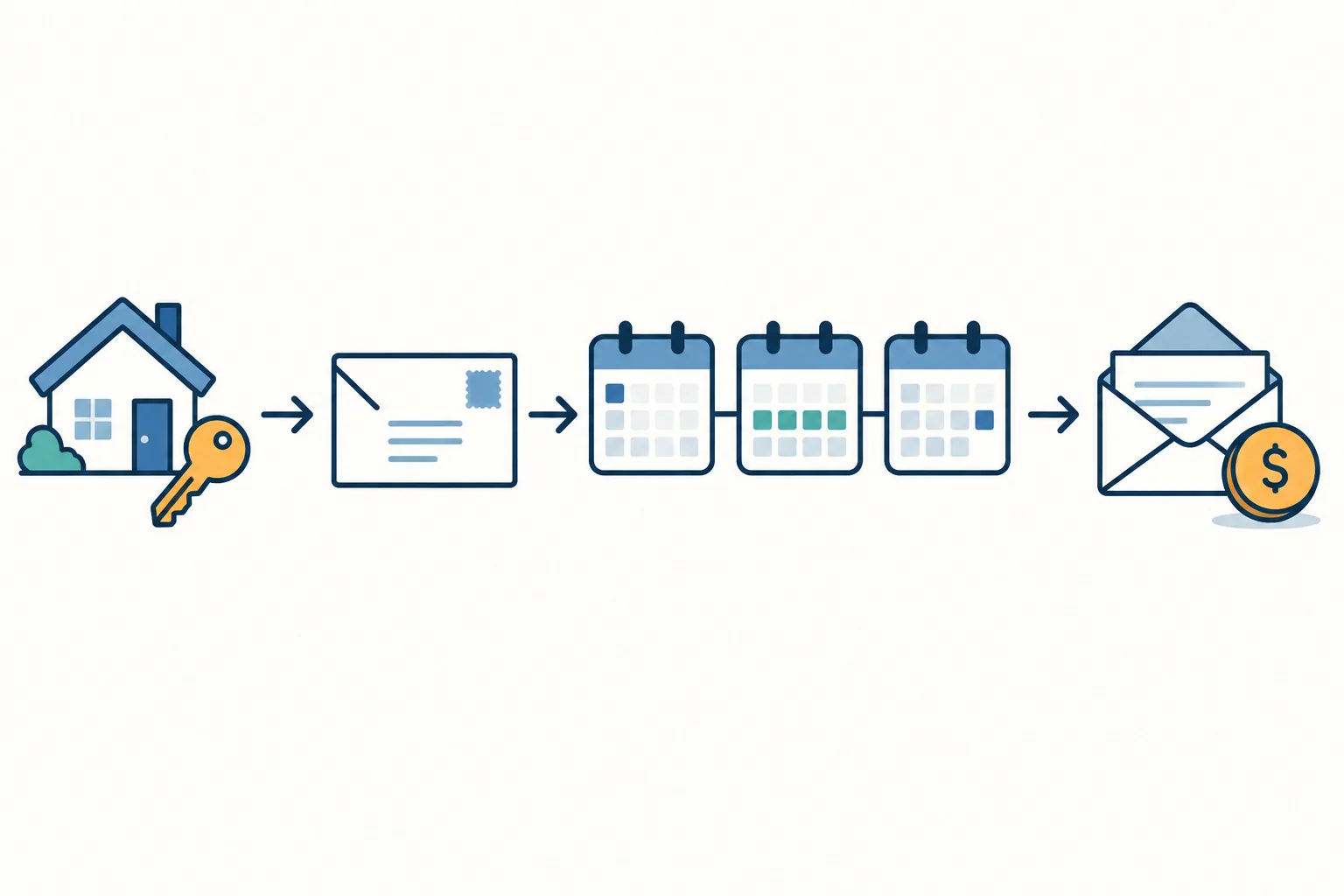
Under Minnesota Statutes § 504B.178, a landlord generally must return a security deposit with required interest or give the tenant a written statement showing the specific reason for withholding all or part of it. The usual period is three weeks after the tenancy ends; the statute also requires receipt of the tenant’s mailing address or delivery instructions. A separate five-day rule applies when a tenant must leave because a building is legally condemned, subject to the statutory exception. Check the current statute for the facts that apply to your tenancy.
If the period appears to have passed, a concise demand letter can identify the tenancy end date, when you supplied an address or delivery instructions, what you received, and what remains unresolved. Attach relevant copies, ask for a response by a reasonable date, and keep proof of delivery. A letter is a communication tool: it does not determine whether a deduction is lawful or guarantee a refund.
The statutory timeline also depends on receipt of a mailing address or delivery instructions. Minnesota law treats timely first-class mailing as sufficient compliance when the envelope is prepaid, properly addressed, and mailed within the required period.
Minnesota security-deposit return deadline: how the three-week rule works
Minnesota Statutes § 504B.178, subdivision 3, says a landlord must, within three weeks after termination of the tenancy, return the deposit with interest or furnish a written statement showing the specific reason for withholding the deposit or any portion. The landlord must also have received the tenant’s mailing address or delivery instructions. The Attorney General’s handbook commonly describes the period as 21 days after the tenancy ends, provided the tenant has given a forwarding address. Three weeks and 21 days refer to the same length of time, but your dates and the statutory conditions still matter.
The statute has a special five-day period when a tenant leaves because the building or dwelling is legally condemned for a reason not caused by the tenant’s willful, malicious, or irresponsible conduct. Do not apply that exception to an ordinary move. If the lease ended early, the parties dispute when the tenancy terminated, or a special protection applies, verify the controlling dates with the statute or a qualified Minnesota housing professional.
The statute does not say that the landlord must use certified mail. It does say that timely compliance is sufficient if the deposit or written statement is placed in United States first-class mail, postage prepaid, in an envelope with a proper return address and correctly addressed using the mailing address or delivery instructions furnished by the tenant. In practice, keep your address notice and the envelope, postmark, delivery record, or electronic payment evidence so you can compare dates rather than relying on memory.
Address, delivery instructions, and what to record
Give the landlord a reliable mailing address or clear delivery instructions in writing as soon as practical. Keep the message, letter, or form you used and evidence of when it was sent or received. If you do not know whether the landlord received it, say that in your request and include the dated copy you have. The address condition appears in the statute alongside the deadline; do not assume that sending an address late automatically creates a new three-week period without checking how the law applies to your facts.
Build one date log: tenancy end, key return, address notice, any refund, any written statement, and each follow-up. If a date is uncertain, separate what you know from what you infer. For example, a postal receipt may prove when you mailed your address notice, while delivery tracking may show when it arrived. That distinction can matter when you compare your records with the statutory period.
The statute’s first-class-mail rule means the mailing date can matter for a landlord’s timely compliance; the day you open the envelope may not be the legal mailing date. Keep the envelope intact until you have recorded its postmark and return address. If an online portal or payment service was used, save its confirmation and transaction date as a separate record.
| Event | Record to keep | Why it helps |
|---|---|---|
| Tenancy ends | Lease, written notice, key-return confirmation | Supports the date the tenancy terminated. |
| Address is provided | Copy of notice and delivery evidence | Shows the address or instructions and when they were sent or received. |
| Refund or explanation arrives | Envelope, postmark, bank record, or message | Helps compare the mailing or payment date with the statutory period. |
What Minnesota law allows a landlord to withhold
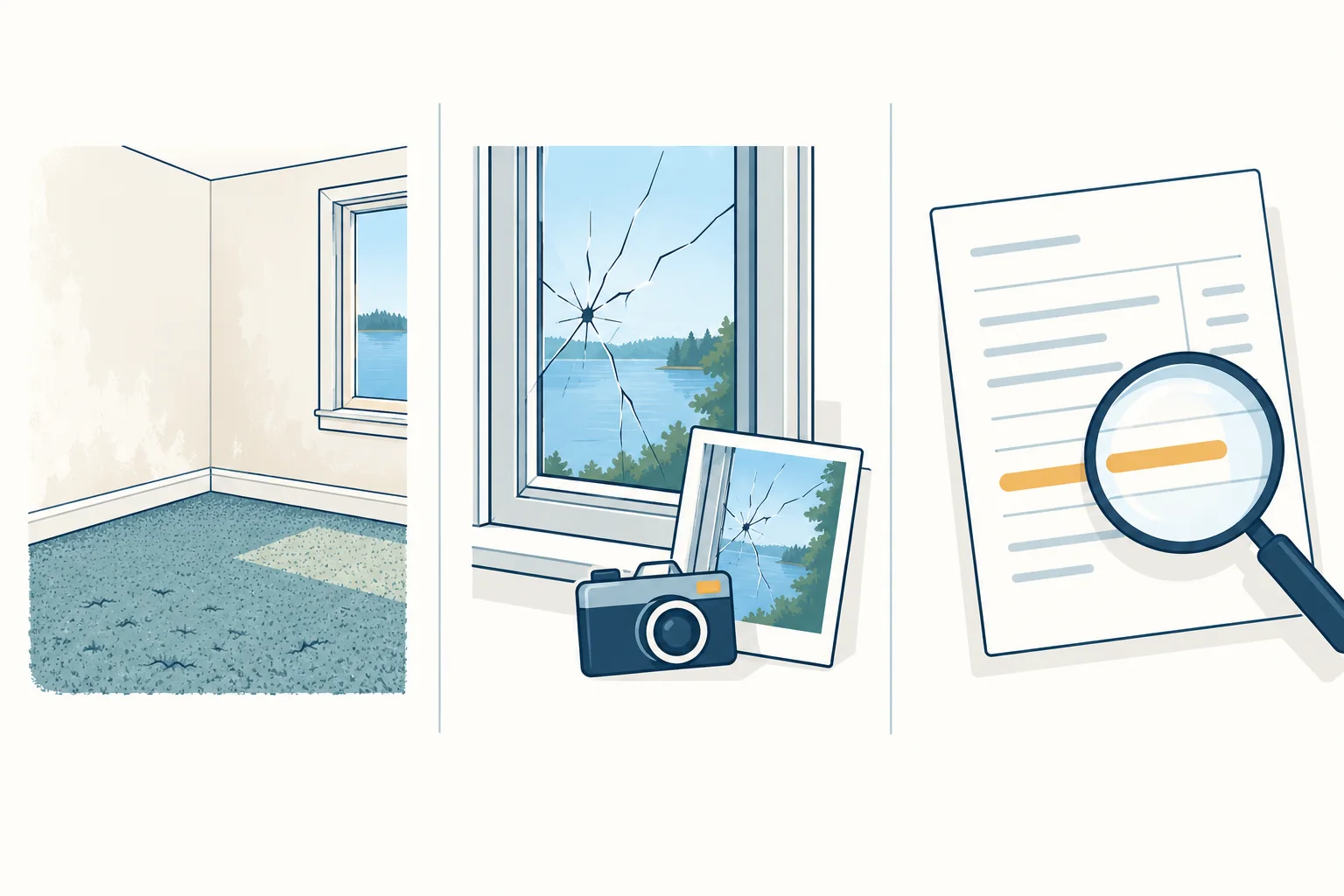
Under § 504B.178, subdivision 3(b), a landlord may withhold only amounts reasonably necessary to remedy a tenant default in paying rent or other money due under an agreement, or to restore the premises to their condition at the start of the tenancy, ordinary wear and tear excepted. The statute places the burden of proving the reason for withholding on the landlord in an action concerning the deposit. A charge’s label alone does not establish whether it fits one of those categories or whether the amount is reasonable.
Compare each stated reason with the lease, move-in and move-out photos, inspection notes, receipts, rent ledger, and messages. A claimed unpaid utility amount, a broken fixture, and faded paint raise different questions. Ask for detail if the statement says only “repairs” or gives a lump sum that is hard to connect to a condition or amount. Describe the exact item you dispute and the record you have; avoid saying every deduction is automatically invalid.
Cleaning is not listed as a separate, unlimited category in subdivision 3(b). If a cleaning charge is included, ask how it relates to a reasonable amount needed to restore the unit to its starting condition, subject to ordinary wear and tear and the full facts. This guide cannot decide whether a specific invoice or condition supports a withholding. Keep original, dated photos and send copies only.
Interest and possible remedies if the deadline was missed
Subdivision 2 sets simple, noncompounded interest at one percent per year. It generally runs from the first day of the month after the deposit is fully paid through the last day of the month in which the landlord in good faith complies with subdivision 3, or until a judgment in a civil action involving liability for the deposit, whichever occurs earlier. An interest amount below one dollar is excluded by the statute. The amount for an individual tenancy depends on dates and payment history, so do not copy a rate or calculation from an old template.
Subdivision 4 describes damages when a landlord fails to provide the required statement on time or fails to handle the deposit as required in specified circumstances. It provides for an amount equal to the portion withheld plus interest as a penalty, in addition to the portion wrongfully withheld and its interest. Subdivision 7 also allows punitive damages up to $500 for each deposit when retention is in bad faith; it includes a statutory presumption in certain cases unless the landlord returns the deposit within two weeks after an action begins.
Those provisions are not a promise of automatic double damages or a guaranteed award. The statutory conditions, facts, and any court determination matter. A demand letter should state the amount you can document and what you are asking the landlord to do. If you intend to assert statutory damages, get current legal advice or review the statute and court instructions carefully.
Check the timeline and balance before you write
First list the tenancy end date, when you supplied your address or delivery instructions, how you supplied them, and what arrived by mail, portal, or payment. Then list the deposit paid, the amount returned, each stated withholding, and the balance you believe remains disputed. Keep arithmetic visible: a reader should be able to follow the request without guessing whether you have already subtracted a partial refund.
Example: a tenant’s records show that the tenancy ended on August 31, the landlord received written delivery instructions on September 1, and no deposit or written statement had arrived by September 22. The tenant can ask the landlord to confirm what was sent, request the deposit with interest or the written reason for withholding, and attach the records supporting those dates. The example is a calendar aid, not a conclusion about another tenancy, a contested termination date, or an exception.
If a statement arrived, place its date and each item next to the records that bear on it. If no statement arrived, say that plainly. If you are unsure when the landlord received your address, state the date you sent it and provide the delivery evidence you have instead of claiming a receipt date you cannot verify.
Write a clear Minnesota security-deposit demand letter in five steps
A useful letter is specific, calm, and easy to verify. Identify the tenant and landlord, the rental address, the tenancy end date, the deposit amount, the address or instructions you supplied, what you received, and the outcome you request. Ask for the deposit and interest or for the written reason for any withholding; if you received a statement, identify the exact amount or item you dispute. Avoid threats, personal accusations, and legal conclusions that you cannot support.
Attach copies rather than originals: the lease page showing the deposit, payment proof, address notice, the landlord’s statement, dated condition photos, and relevant messages or receipts. Number or name the attachments so the reader can match them to the timeline. If a record is missing, say so and request the specific explanation or document you need rather than filling the gap with a guess.
Choose a delivery method that creates a record and fits the communication agreement and applicable law. Minnesota’s statute expressly treats timely first-class mailing as sufficient when the envelope is prepaid, correctly addressed, and uses the tenant’s address or delivery instructions. A trackable method can help you keep evidence, but do not claim that certified mail is legally required by § 504B.178. Save the signed copy, all enclosures, proof of mailing or delivery, and any reply.
Records to gather before asking for your deposit
A focused evidence file can make it easier to see which dates and amounts are agreed and which remain disputed. Organize the lease and deposit receipt, payment history, address notice, move-in and move-out records, statement or invoices, envelopes, and communication in date order. If roommates each paid part of the deposit, note each payment and any written agreement about who should receive a refund.
Keep original photo files with their dates when possible and make copies before sending them. Do not edit an image, receipt, or message; if you need to explain a detail, add a separate note that identifies what you are pointing out. A clear record does not prove every legal element by itself, but it helps you ask a focused question and respond to a specific item instead of exchanging vague accusations.
| Record | What it can help establish | Practical check |
|---|---|---|
| Lease and deposit proof | Rental address, parties, deposit amount, and payment date | Match the figures to the signed lease and receipt. |
| Address or delivery notice | The address supplied and when it was sent or received | Keep the message or letter and delivery confirmation. |
| Move-in and move-out photos | Visible condition and changes over time | Preserve original files and label each room and date. |
| Written statement and receipts | The reason and amount the landlord gave | Compare each stated reason with the lease and condition records. |
| Refund and message history | Amounts received and the sequence of communications | Save the envelope, payment confirmation, and dated messages. |

If the landlord does not respond
Keep the proof of delivery and send one concise follow-up that refers to the date of your first request. If the landlord replies with a statement, compare it with your records and ask a focused question about any unclear item. Keep your figures consistent; if a new receipt or partial payment changes your calculation, explain the change and save the record.
For an unresolved dispute, review current Minnesota Judicial Branch tenant information and consider contacting legal aid or a qualified attorney. Section 504B.178, subdivision 9, allows an action to recover a rental-property deposit in the county where the property is located or, at the tenant’s option, the county where the landlord resides. Filing procedures, deadlines, fees, and remedies depend on the claim and current rules, so verify the court’s instructions before filing. This page does not assess the merits of a particular case.
Minnesota security-deposit questions
How long does a Minnesota landlord have to return a security deposit?
The general period in Minn. Stat. § 504B.178 is three weeks after termination of the tenancy, with the tenant’s mailing address or delivery instructions received. The landlord must return the deposit with statutory interest or give a written statement showing the specific reason for withholding. A limited five-day rule applies to certain condemnation-related move-outs. Verify the current statute and dates for your situation.
Is Minnesota’s security-deposit deadline 21 days or three weeks?
The Minnesota statute says three weeks; the Attorney General’s handbook commonly describes that period as 21 days. Those are the same length of time. The termination date, receipt of the tenant’s address or delivery instructions, statutory mailing rule, and any exception still matter.
Does the three-week period start when I send my forwarding address?
The statute sets the general period by reference to the tenancy termination and also requires receipt of the tenant’s mailing address or delivery instructions. It does not make this guide a date calculator for late or disputed notices. Keep proof of when the address was sent and received, and check the statute or seek advice if the timeline is unclear.
What can a landlord deduct from a Minnesota security deposit?
The statute allows only amounts reasonably necessary to remedy a tenant’s default in paying rent or other money due under an agreement, or to restore the premises to their starting condition, ordinary wear and tear excepted. The landlord has the burden of proving the reason for withholding in an action concerning the deposit. Review the specific statement and evidence.
Does a Minnesota security deposit earn interest?
Minn. Stat. § 504B.178 provides simple, noncompounded interest at one percent per year, calculated under the statute’s timing rules. An amount below one dollar is excluded. The amount for a particular tenancy depends on the deposit and dates, so verify the current text before calculating.
Is certified mail required for a Minnesota deposit demand letter?
Section 504B.178 says timely compliance is sufficient when the deposit or statement is placed in prepaid, correctly addressed first-class mail within the required period. It does not state that certified mail is required. A trackable method may help preserve delivery evidence; confirm the right method for the specific notice you send.
Can I automatically demand double damages if my Minnesota deposit is late?
Do not assume an automatic award. The statute describes a penalty and additional damages in specified circumstances, plus up to $500 in punitive damages for bad-faith retention. Whether the provisions apply depends on the facts and the legal process; this guide cannot predict a court result.
Where can I get a Minnesota security-deposit demand-letter form?
LawHelpMN offers a do-it-yourself security-deposit demand-letter resource. Read its instructions and eligibility notes, check the current statute, and adapt the facts carefully. A form cannot decide whether a particular deduction is valid or guarantee repayment.
What is a forwarding address for a Minnesota security deposit?
It is the mailing address or delivery instructions where the landlord can send the deposit or written statement. Section 504B.178 uses those terms but does not prescribe a special form for naming the address. Give a clear, usable destination and keep a dated copy and proof of when the landlord received it.
Can I report a Minnesota landlord for not returning my security deposit?
The Minnesota Attorney General offers a Tenant Report Form for Minnesota tenants to report a landlord concern. The office says it may use reports to identify potential violations and monitor patterns, but cannot respond to every report or represent an individual. A report is not a court claim for your deposit; review the statute and current court or legal-aid information for individual next steps.
Official and practical Minnesota resources
The statute is the primary source for the return period, interest, permitted withholding, and potential damages. State, legal-aid, and court pages provide plain-language context and next steps; verify the current text and instructions before acting.
- Minnesota Revisor of Statutes — § 504B.178, Security DepositsOfficial statutory text for timing, interest, permitted withholding, and potential damages.
- Minnesota Attorney General — Landlords and Tenants: Ending the TenancyState consumer guidance about deposit return, deductions, interest, and court options.
- LawHelpMN — Security Deposit Demand Letter (Do It Yourself)Legal-aid self-help tool; read the eligibility and use instructions and check its update date.
- Minnesota Judicial Branch — TenantsCourt and tenant information; confirm current forms and filing instructions.
- LawHelpMN — 2026 Security Deposits fact sheetCurrent plain-language Minnesota legal-aid overview; it is legal information, not legal advice.
- Minnesota Attorney General — File a Complaint / Tenant Report FormMinnesota tenants may report a landlord concern; the office may use reports to identify patterns and cannot respond to every report or represent an individual.
Organize your deposit facts
Use Depossier’s general deposit-check workflow to lay out dates, amounts, and records before preparing a request. It does not calculate Minnesota legal deadlines or decide whether you are entitled to a refund; you review and send any materials yourself.