
California renter guide
California Security Deposit Demand Letter: Deadlines, Deductions & Steps
A practical way to check the 21-calendar-day accounting, understand a disputed deduction, and send a fact-based written request under California law.
Reviewed
Quick answer
Start with California’s 21-calendar-day deadline
A California security deposit demand letter should identify the move-out date, deposit, and what the landlord sent within 21 calendar days. Civil Code section 1950.5 generally requires an itemized statement and return of any balance within that period. The clock runs from when the tenant vacates, not when a demand letter is mailed.
Separate no refund/no accounting from a partial refund with a disputed deduction. Ask for the full balance and statement in the first case; identify the charge and request its proof in the second. California Courts’ deposit tool may fit some nonreturn cases, while a partial-refund dispute may need a general letter.
The law and procedures can depend on the tenancy, dates, and facts. This guide reflects the California statutes reviewed on October 2, 2026; it is general information, not legal advice or a promise of recovery.
How California’s 21-day security deposit deadline works
Civil Code section 1950.5(h) generally gives a landlord 21 calendar days after the tenant vacates to send an itemized statement and return any remaining deposit. Weekends count. Record when possession ended and keep proof of key return.
A missed date is a reason to review the accounting, not a guaranteed court result. State what arrived and when, then make a specific request. A late statement, missing refund, and disputed repair charge can involve different facts.
No refund and no itemized statement
If nothing was returned and no statement arrived, identify the unit, deposit, move-out date, and end of the 21-day period. Request the balance and required accounting. California Courts’ demand-letter tool covers some nonreturn situations; check its current scope.
Partial refund with a disputed charge
If you received part of the deposit, name each disputed charge and amount. Explain briefly how the move-in condition, ordinary wear, or records differ from the stated work. Ask for the related itemization, cost records, and photographs.
AB 414 and electronic deposit returns since January 1, 2026
Since January 1, 2026, AB 414 changes how a remaining balance is returned, but it does not extend the 21-calendar-day accounting deadline. If the landlord received the security deposit or rent electronically, the remaining deposit is generally returned electronically to a bank account or other financial institution the tenant designates in writing. The landlord and tenant may agree in writing to another return method, including personal delivery or a first-class mailed check. The law also requires written notice of the electronic-return option within the statutory timing unless the parties already agreed in writing to a different method.
Keep the refund separate from the itemized statement: that statement is delivered personally or by prepaid first-class mail unless both sides mutually agreed to email it or mail it to an address the tenant provided. For multiple adult tenants, the default check may be payable to all adults listed on the lease; a written agreement can set a different distribution method. Check current Civil Code section 1950.5(h) for the details that fit your tenancy.
What a California landlord may deduct from a security deposit
A landlord may claim only amounts reasonably necessary for purposes allowed by law, such as unpaid rent, tenant-caused damage beyond ordinary wear, necessary cleaning to restore move-in cleanliness, or property the agreement requires the tenant to return. An itemized label alone does not prove a charge is reasonable.
Compare each charge with the lease and the unit’s condition at move-in and move-out. Pre-existing defects and ordinary wear are not chargeable. Repair and cleaning costs are limited to what is reasonably needed to restore the starting condition; professional cleaning is not automatically owed.
- Ask what condition was repaired or cleaned and where it appears in the statement.
- Compare dated photos, inspection notes, and earlier repair requests.
- Check that labor, materials, and the amount connect to actual work.
- Compare move-out cleanliness with the unit’s starting level.
What California’s photo and receipt rules add
AB 2801 added photographs to Civil Code section 1950.5. Since April 1, 2025, landlords must photograph the unit after regaining possession but before claimed repair or cleaning, and again after the work. For tenancies starting on or after July 1, 2025, move-in photos are also required.
When an allowable repair or cleaning is deducted, the statement generally includes the relevant photos and a written cost explanation. In-house work should describe the task, time, and reasonable hourly rate; outside work generally needs the provider’s bill, invoice, or receipt. Material deductions need cost support too.
If repair and cleaning deductions together are $125 or less, supporting documents may not be automatic. A tenant can request them within 14 calendar days after receiving the statement. If work or vendor paperwork is delayed beyond 21 days, a good-faith estimate may be used, followed by records and any adjustment within 14 days after completion or receipt.
- Request before-work and after-work photos tied to the charge.
- For a combined deduction of $125 or less, request records within 14 calendar days of receiving the statement.
- If the landlord used an estimate, note why and track the follow-up date.
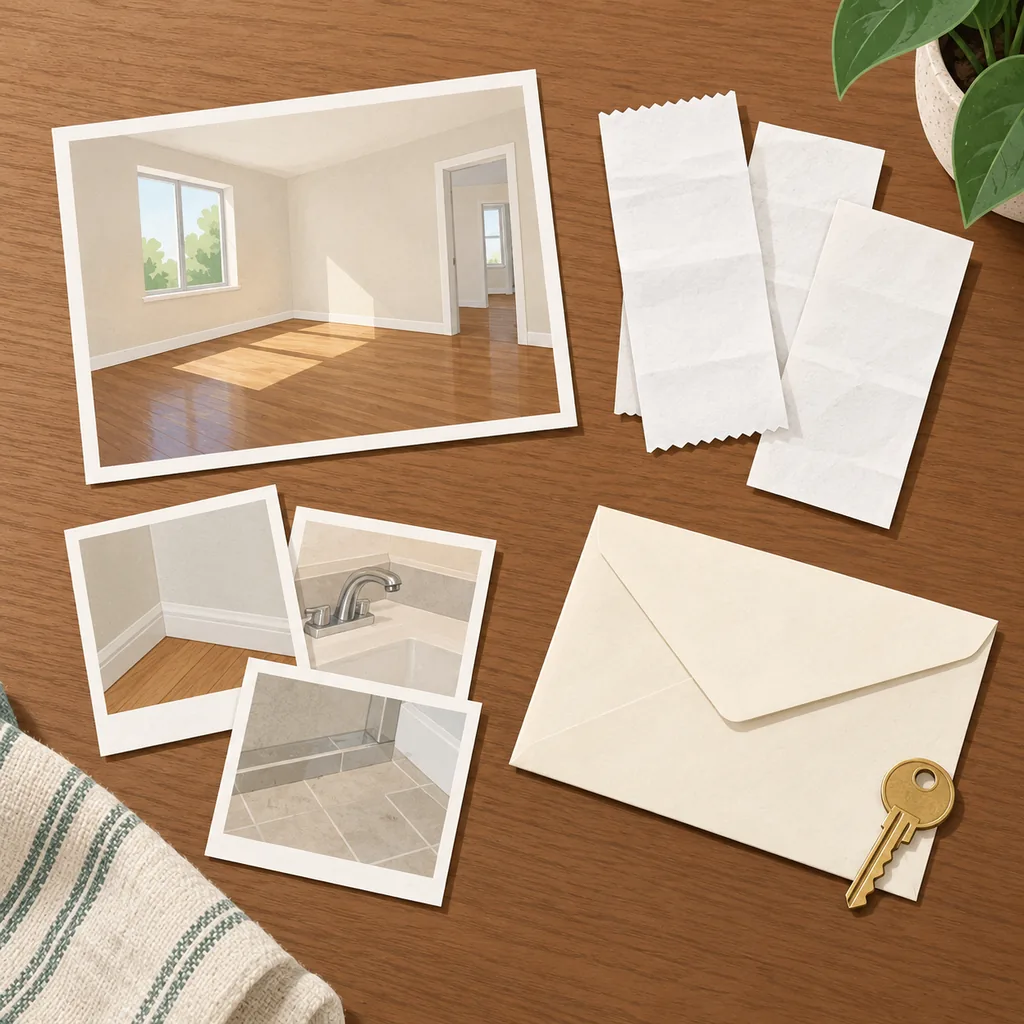
Gather the records before writing a California deposit letter
Gather the lease, proof of deposit and rent, move-out date, key return, forwarding-address notice, itemized statement, and refund. Save the envelope or dated message that delivered the accounting.
Group condition records by date and room: photos, videos, inspection notes, maintenance requests, and messages. Preserve original files and timestamps. Send copies with your letter and keep one complete set.
Example: If a renter paid a $1,200 deposit and the statement lists a $300 repair charge, compare the move-in and move-out records, the itemized description, and any invoice or receipt. A letter can identify the specific charge and ask for its supporting records and any balance the renter believes is due. The figures only show how to organize a question; they do not predict what a court would decide.
- Build a timeline
List lease end, vacancy, key return, address notice, statement receipt, and payments.
- Match amount to proof
Show the deposit, refund, each deduction, and the balance you dispute; link facts to records.
- Separate facts from questions
Describe what the documents show and request what is missing. Avoid unsupported claims about intent.
- Keep a complete copy
Save the letter, attachments, delivery record, and replies together.
How to write a California security deposit demand letter
A clear California security deposit demand letter is specific and calm. Include the rental address, landlord or manager’s name, tenancy dates, deposit amount, date you vacated, and the amount returned. Say whether the itemized statement arrived within 21 days.
Ask for the result you want: an unpaid balance and accounting, correction of a named deduction, or the related photos and cost records. Include a forwarding address. You may set a reasonable response date, but do not call it a statutory deadline unless a rule or agreement says so.
- State the tenancy facts
Give the address, dates, deposit, move-out date, and forwarding address.
- Show the calculation
List the amount paid, returned, withheld, and requested.
- Identify each dispute
Name the statement line, explain the evidence briefly, and request records that apply.
- Attach useful copies
Include only documents that verify dates, payment, or condition.
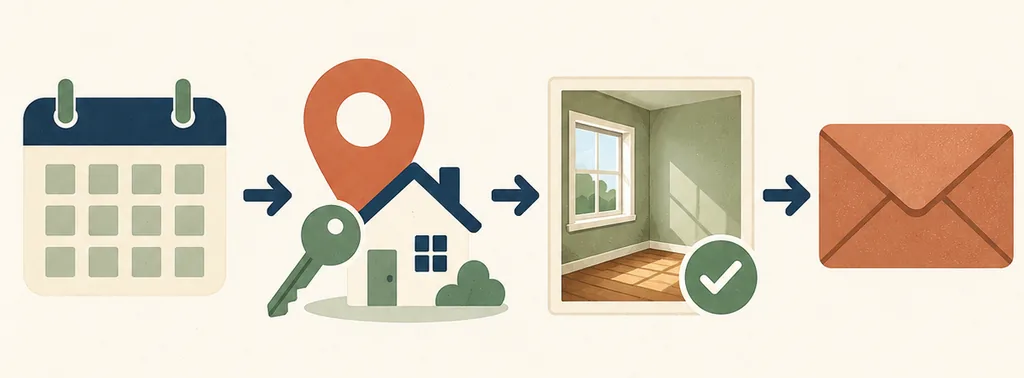
Where to send the letter and what delivery proof to keep
Send the letter to an address verified from the lease, prior notices, or official business records. Section 1950.5 describes the landlord’s deposit duties; it does not make certified mail a universal prerequisite for a tenant’s demand.
Choose a method that creates a useful record. Save the complete letter, attachments, receipt or sent message, tracking and delivery events, and every reply. Keep originals. Check any agreement or court tool for specific contact instructions.
- Verify the recipient and address.
- Save exactly what you sent and when.
- Keep proof of delivery and any returned envelope.
- Coordinate names and amounts if several tenants paid.
What to do if a California landlord does not return the deposit
If the landlord does not respond, compare the missing refund or records with your timeline and keep follow-ups factual. For a disputed deduction, identify the missing proof or explain why the amount appears unreasonable. A paper trail helps you assess options but does not decide the case.
California Courts’ self-help pages explain deposit letters and small-claims steps. Check current filing, service, and monetary-limit rules. Under section 1950.5(m), a court may award up to twice the deposit in statutory damages plus actual damages when the facts warrant a bad-faith finding. The award is not automatic; seek qualified help if the facts or deadlines are unclear.
- Keep the timeline, statement, payment proof, photos, and replies together.
- Read current court instructions before filing.
- Consult a California tenant-aid group or lawyer for complex facts.
California security deposit questions
How long does a California landlord have to return a security deposit?
Section 1950.5(h) generally gives the landlord 21 calendar days after the tenant vacates to send an itemized statement and return any balance. Facts and exceptions matter.
Can I send a California security deposit demand letter after 21 days?
Yes. The letter does not restart the period. State the move-out date, what arrived, and the balance or accounting you seek.
What if my landlord returned part of my deposit but kept money for cleaning?
Name the cleaning charge, compare move-in and move-out records, and request its cost explanation and support. Cleaning is limited to what is reasonably needed to restore move-in cleanliness, excluding ordinary wear.
Does California require photos for a deposit deduction?
For allowable repair or cleaning deductions, the current statute generally requires relevant photos and a cost explanation. Limited exceptions and a tenant’s 14-day document-request right affect the details.
Can I request receipts for a deduction of $125 or less?
Yes. Request documents within 14 calendar days after receiving the itemized statement. The landlord then generally has 14 calendar days to comply with applicable requirements.
Is certified mail required for a California deposit demand letter?
Section 1950.5 does not make certified mail a universal prerequisite for a tenant demand. Trackable delivery can help document the record; check applicable instructions.
Can I automatically get twice my California security deposit back?
No. Section 1950.5(m) allows a court to award up to twice the deposit plus actual damages when the facts warrant a bad-faith finding; it is not automatic.
Where can I find a California security deposit letter form?
California Courts offers self-help information and a demand-letter tool for certain nonreturn cases. A partial-refund dispute may need a general letter or individual legal guidance.
Official California sources
Check the current official text and instructions for your facts. The links below support the legal summary; they do not replace individual advice.
- California Civil Code § 1950.5 — security depositsCurrent statute, including the 21-day accounting, allowable deductions, photo and document requirements, and bad-faith provision in subdivision (m).
- California Courts — guide to security depositsOfficial court self-help overview of move-out inspections, itemized statements, deductions, and dispute options.
- California Courts — security-deposit demand-letter toolOfficial interactive resource for certain situations where a security deposit was not returned; check its current scope and instructions.
- California Department of Real Estate — Moving OutState agency renter guidance on move-out inspections and deposit accounting.
- AB 2801 (2023–2024) — tenancy and security depositsEnacted bill that added the current move-in, pre-repair, and post-repair photograph requirements.
- AB 414 (2025–2026) — return of securityEnacted 2025 amendment to Civil Code section 1950.5, effective January 1, 2026.
Organize the facts before drafting
Use Depossier’s letter workflow to turn tenancy dates, amounts, and supporting records into a clear first draft. Review every detail before sending.