
Virginia renter guide | updated October 2026
Virginia Security Deposit Deductions: How to Challenge an Unfair Charge
Compare the landlord's itemized statement with your lease, move-out evidence, and the Virginia timeline before you send a clear written request or consider court or legal aid.
Updated
Quick answer
Start with the accounting, then test each charge
If you are asking how to take a landlord to court for unfair deductions from a security deposit in Virginia, do not begin with a lawsuit form. First compare the amount you paid, the amount returned, the landlord's written explanation, the lease, and your move-in and move-out records. Virginia generally uses a 45-day period for returning the deposit or sending a written itemized statement after the tenancy ends or the premises are vacated, but the exact rule and any local or lease terms should be checked against the current Virginia Code.
A charge is not automatically invalid because you dislike it, and a landlord's label is not proof that the charge is valid. Separate ordinary wear from tenant-caused damage, ask for missing invoices or explanations, and state the amount you dispute. A factual demand letter can create a useful record before you decide whether court, mediation, or legal aid fits your facts. Depossier prepares information and document text; you review and send it yourself.
This guide is educational. Virginia law, local ordinances, the lease, housing type, and the dates in your file can change the analysis. Verify the current code or speak with a Virginia housing professional before relying on a deadline or filing a claim.
What Virginia's 45-day security deposit rule means
Virginia Code section 55.1-1226 is the starting point for many residential security-deposit disputes. It generally requires a landlord to return the deposit, or the balance after lawful deductions, within 45 days after the termination of the tenancy or the date the tenant vacates, whichever occurs later. The same general period is used for a written statement describing the reasons for withholding money. Read the current statute for the exact wording, exceptions, and any provisions that apply to your housing arrangement.
The date you stopped living in the unit may not be the only date that matters. Record when the lease ended, when you returned keys, when you gave a forwarding address, and when you actually received the refund or accounting. If the landlord mailed a statement, keep the envelope and postmark. If the refund was electronic, save the transaction record. A timeline helps you identify a real delay without turning an uncertain date into an absolute legal conclusion.
A late or vague statement can be a useful fact in a dispute, but it does not by itself prove every deduction is unlawful. Ask what was withheld, why it was necessary, how the amount was calculated, and which lease or repair record supports it. If the statement is incomplete, say exactly what is missing and keep the original document unchanged.
- Write down the tenancy end date and the date you vacated.
- Save the forwarding-address notice and proof that it was sent.
- Keep the refund, itemized statement, envelope, and payment record together.
- Check the current Virginia Code and any city or county rule before stating a deadline.
| Date or document | What to record | Why it matters |
|---|---|---|
| Tenancy ended | Lease end date, notice, and key return | Anchors the timeline. |
| Forwarding address | Copy, delivery proof, and date | Shows where the accounting could be sent. |
| Accounting received | Statement, envelope, email, or portal record | Lets you compare timing and detail. |
| Refund received | Bank, check, or payment confirmation | Shows the amount actually returned. |

Ordinary wear and tear versus chargeable damage
The central question is usually not whether the unit looked exactly as it did on move-in. Paint fading, small nail holes, minor carpet wear, and gradual appliance aging may be ordinary wear, depending on the item, its age, the lease, and local law. A broken door, missing fixture, large hole, or repair tied to a documented incident may raise a different question. Avoid treating a category label as a final answer; compare the condition, useful life, and proof.
Ask the landlord to identify the exact location, date, work performed, and amount for each line item. Compare those details with your move-in checklist, dated photos, maintenance requests, inspection notes, and messages. If a charge combines cleaning, labor, replacement, and administrative fees, ask for the calculation rather than disputing a lump sum with a general statement.
A landlord may have a legitimate claim for unpaid rent or a tenant-caused repair, but the deposit statement should still let you understand what was withheld. Your response can acknowledge an amount you do not dispute while challenging a separate item. That narrower approach is often clearer than saying every deduction is bad.
| Charge description | Questions to ask | Evidence to compare |
|---|---|---|
| Cleaning | What condition required the work, and what was the actual cost? | Move-out photos, checklist, invoice. |
| Paint or carpet | Is this ordinary aging or a specific tenant-caused condition? | Move-in photos, age, repair notes. |
| Broken fixture | What item was broken, when, and was it repaired or replaced? | Messages, photos, receipt, useful-life record. |
| Unpaid amount | What lease charge or balance is claimed? | Rent ledger, notices, payment confirmations. |
Build a Virginia security deposit evidence file
Before you send a Virginia security deposit demand letter, make one folder with the facts that another person can check. Put the lease and addenda first, then the payment proof, move-in and move-out photos, inspection reports, repair messages, the itemized statement, and the date log. Rename files with the date and a short description so you can cite them without searching during a conversation.
Do not send a complete lease or every personal document automatically. Share only what supports the disputed item, and remove unrelated account numbers or sensitive information. Keep the original files and a separate copy of anything you attach. If a photo lacks a date, label it as undated instead of presenting an estimate as proof.
If the landlord did not provide an itemized statement, make that a specific entry in your timeline. If the landlord did provide one, list each charge in a table with the amount, your position, and the missing record. This turns an emotional dispute into a reviewable request.
| Evidence | Good file name | Use in the letter |
|---|---|---|
| Lease and addenda | 2025-lease-addendum.pdf | Identify deposit terms and notice duties. |
| Move-in photo | 2025-06-01-bedroom-wall.jpg | Compare condition at the start. |
| Move-out photo | 2026-07-31-bedroom-wall.jpg | Show condition when you left. |
| Itemized statement | 2026-09-10-landlord-statement.pdf | Quote the exact charge and amount. |
| Payment proof | 2025-06-01-deposit-payment.pdf | Confirm the original deposit. |
| Delivery record | 2026-09-15-demand-delivery.pdf | Show when your request was sent. |
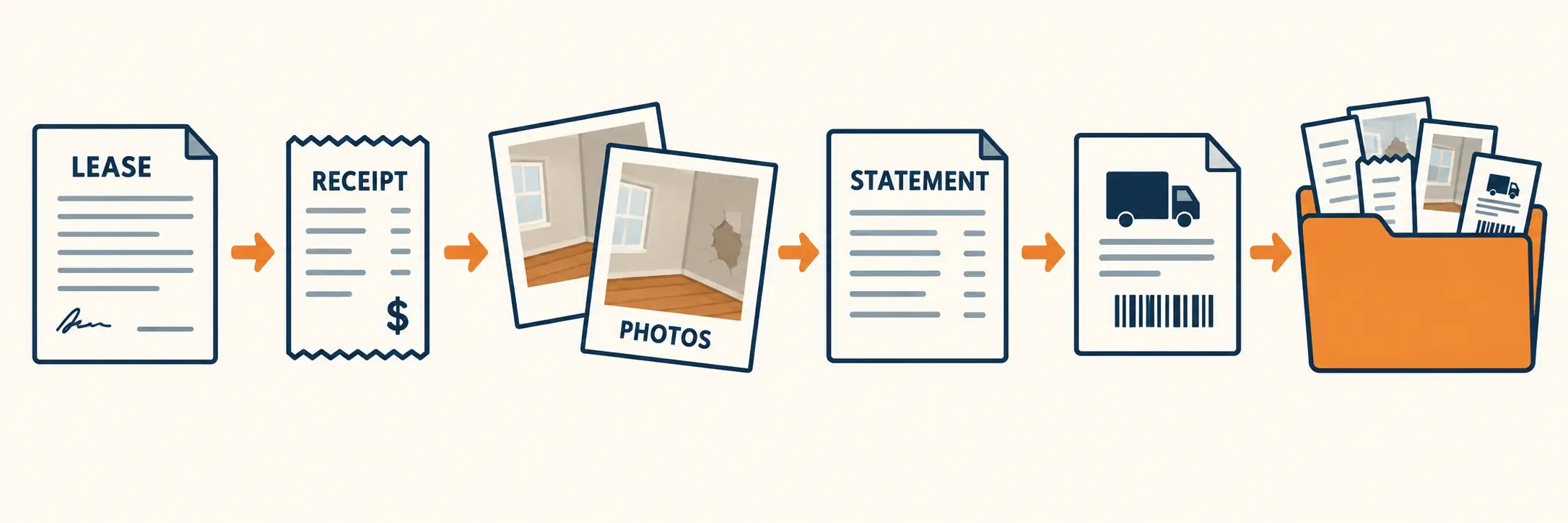
How to write and send a Virginia security deposit demand letter
A demand letter should make the requested correction easy to understand. Put the rental address and relevant dates at the top. State the deposit paid, the amount returned, the amount still disputed, and the date of the landlord's statement. Then address each disputed line item with a short fact and a specific request for money, an itemized explanation, a receipt, or another record.
Use a response date that gives the landlord a reasonable chance to review the file and does not pretend to replace a statutory notice period. State that you are preserving your rights while trying to resolve the accounting. Keep the tone neutral. Do not threaten arrest, public exposure, or a guaranteed judgment. Those statements distract from the evidence and can create a new dispute.
Check the lease and current Virginia guidance for the address and delivery method that apply. Send the letter in a way that creates a record, such as a tracked mailing or a documented email when appropriate. Save the exact version sent, attachments, tracking, delivery confirmation, and any reply. Depossier's general demand-letter template can help organize the facts, but you must review every date, amount, name, and legal reference before sending.
- 1. Identify the account
List the property, parties, tenancy end date, forwarding address, original deposit, refund, and disputed balance.
- 2. Separate each charge
Create one row per deduction and state what record is missing or what fact you disagree with.
- 3. Attach focused proof
Include the strongest pages or photos, redact unrelated sensitive data, and keep the originals.
- 4. Make a precise request
Ask for the amount, record, correction, or explanation you want and set a reasonable response date.
- 5. Preserve delivery
Use a suitable address and method, then save the sent letter, attachments, tracking, and response.
When court, mediation, or legal aid may fit
If a written request does not resolve the accounting, the next step depends on the amount, the evidence, the lease, and the remedy you are seeking. Virginia courts and local self-help resources can explain filing procedures, but they cannot decide your facts in advance. Read the current court instructions for the correct venue, forms, service requirements, filing fee, and time limits.
Small claims may be designed for lower-dollar disputes, but a deposit case can still involve proof questions about damage, notice, habitability, retaliation, or a counterclaim. A court clerk can explain process, not whether your deduction argument will win. Legal aid or a tenant lawyer may be especially useful when the amount is high, the landlord has asserted a counterclaim, you received a court paper, or the dispute involves eviction, discrimination, retaliation, or unsafe housing.
Bring a short chronology and a labeled evidence index to any advice appointment. Ask the adviser to distinguish what the statute says from what your evidence proves. If you negotiate, put the final amount and release terms in writing before accepting payment.
- Check Virginia court self-help information for venue, forms, service, fees, and deadlines.
- Contact Virginia Legal Aid or a local tenant resource if the dispute is complex or high stakes.
- Do not ignore a summons, counterclaim, eviction notice, or deadline while negotiating a deposit.
- Keep a written settlement record that states the amount paid and what claims it resolves.
Common mistakes that weaken an unfair-deduction claim
The strongest file is usually specific and consistent. A letter that changes the move-out date, asks for an amount that does not match the math, or attaches a photo without identifying the room gives the reader an avoidable reason to doubt the claim. Check the arithmetic and use one date format throughout the file.
Do not copy a deadline from another state. Virginia's general 45-day language is not a universal rule for every housing situation, and local ordinances or contract terms may add context. Do not call ordinary wear illegal without explaining the condition, age, and evidence. Do not publish a landlord's personal information to pressure a response.
Finally, avoid sending a template without editing it. A generic demand letter can mention the wrong state, wrong address, wrong amount, or a promise the law does not make. Read the final version aloud, compare it with your evidence index, and save the exact copy you sent.
- Using a California, Connecticut, or Minnesota deadline for a Virginia tenancy.
- Demanding the full deposit without subtracting an amount you already accept.
- Calling every cleaning or repair charge fraudulent without a factual comparison.
- Sending sensitive records that do not support the disputed deduction.
- Failing to preserve the sent letter and proof of delivery.
A practical Virginia deposit dispute checklist
Use this short checklist before you decide whether to send a demand letter or ask for legal help. The goal is not to predict a result; it is to make the file complete enough for a landlord, mediator, legal-aid adviser, or court to follow.
If the records show that one charge is supported and another is unclear, narrow the request to the unclear item. A precise request can still ask for the undisputed balance while reserving the question about a repair or fee. Keep copies of every response and update the timeline when a new document arrives.
For a state-specific review, use the Virginia Code and current local resources as the authority. Use Depossier to organize the facts and prepare a draft that you review and send yourself.
- Confirm the rental address, tenancy end date, key return, and forwarding address.
- Calculate the original deposit, refund, deductions, and disputed balance twice.
- Match every charge to a condition, lease term, invoice, receipt, or payment record.
- Separate ordinary wear, tenant-caused damage, unpaid rent, and unexplained fees.
- Choose a delivery method that creates a record and keep the proof.
- Verify current Virginia rules before filing or accepting a settlement.
Virginia security deposit deduction questions
How to take a landlord to court for unfair deductions from a security deposit in Virginia?
First gather the lease, dates, payment proof, itemized statement, photos, and delivery records. Send a factual request, then review current Virginia court instructions or legal-aid options before filing.
How long does a Virginia landlord have to return a security deposit?
Virginia generally uses a 45-day period for returning the deposit or providing a written accounting after the tenancy ends or the tenant vacates, but verify the current code and facts that apply.
Can a Virginia landlord charge for normal wear and tear?
The answer depends on the condition, age, lease, local rule, and evidence. Compare move-in and move-out records rather than relying on a label alone.
What evidence should I send with a Virginia security deposit demand letter?
Send focused copies such as the lease term, payment proof, dated photos, the itemized statement, relevant messages, and delivery records. Redact unrelated sensitive information.
Can a landlord charge more than the security deposit in Virginia?
A landlord may assert a separate claim in some circumstances, but the deposit accounting and any additional claim are fact-specific. Review the lease, records, and current law before assuming the answer.
Where can I get Virginia tenant legal aid?
Virginia Legal Aid and local housing resources can explain eligibility and referral options. Court clerks can explain process but cannot give legal advice.
Official sources to verify
These links are starting points for current Virginia rules and help. They are not a substitute for legal advice or a fact-specific review.
- Virginia Code § 55.1-1226 — Security depositsRead the current statutory text and any related provisions.
- Virginia Department of Housing and Community Development — Landlord-tenant resourcesUse current state housing resources and contacts.
- Virginia Legal AidFind eligibility and local legal-aid information.
Organize your Virginia deposit dispute
Use Depossier to collect dates, amounts, disputed deductions, and evidence into a draft you review and send yourself. The workflow helps you check the facts before you decide what to ask for next.